Creating a smooth digital voice experience for BT customers
BT was preparing to launch its Digital Voice service, the next step in the evolution of the traditional landline. The new service offered better audio quality and new features like call barring. My role was to lead the user experience design, creating a journey that helped both new and existing customers discover, install, and manage the service easily.
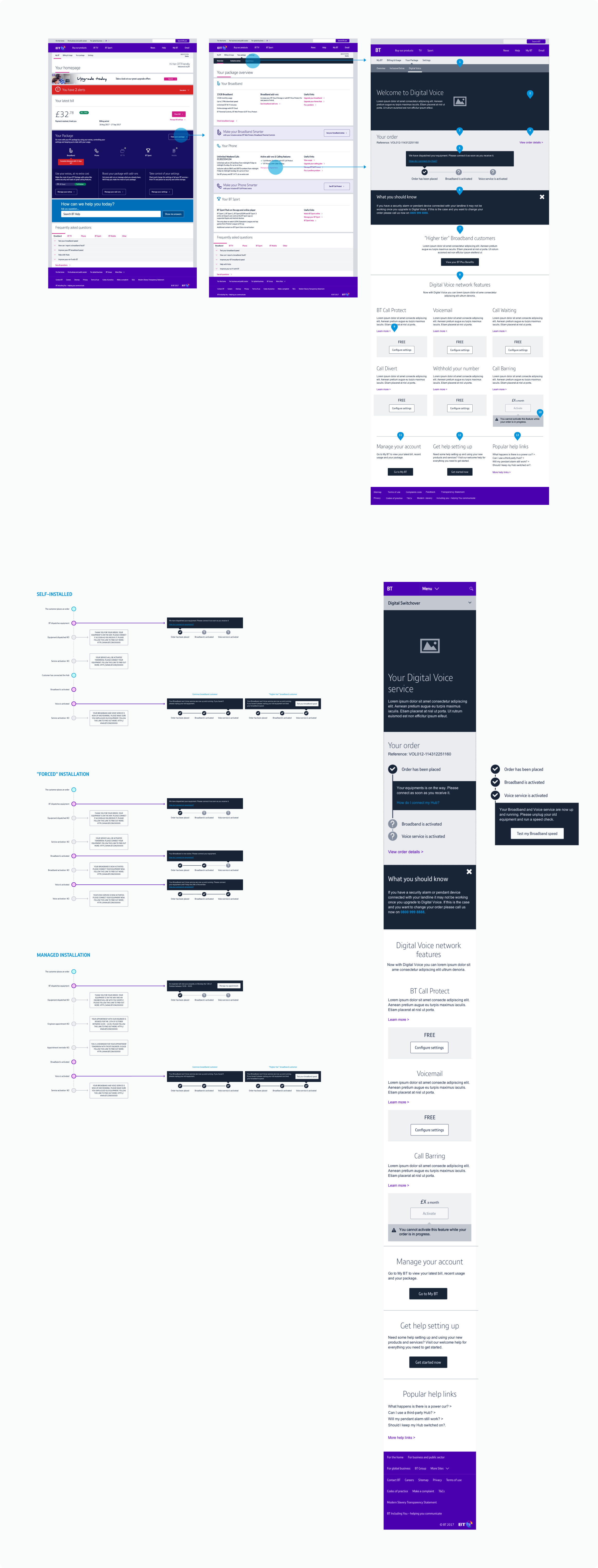
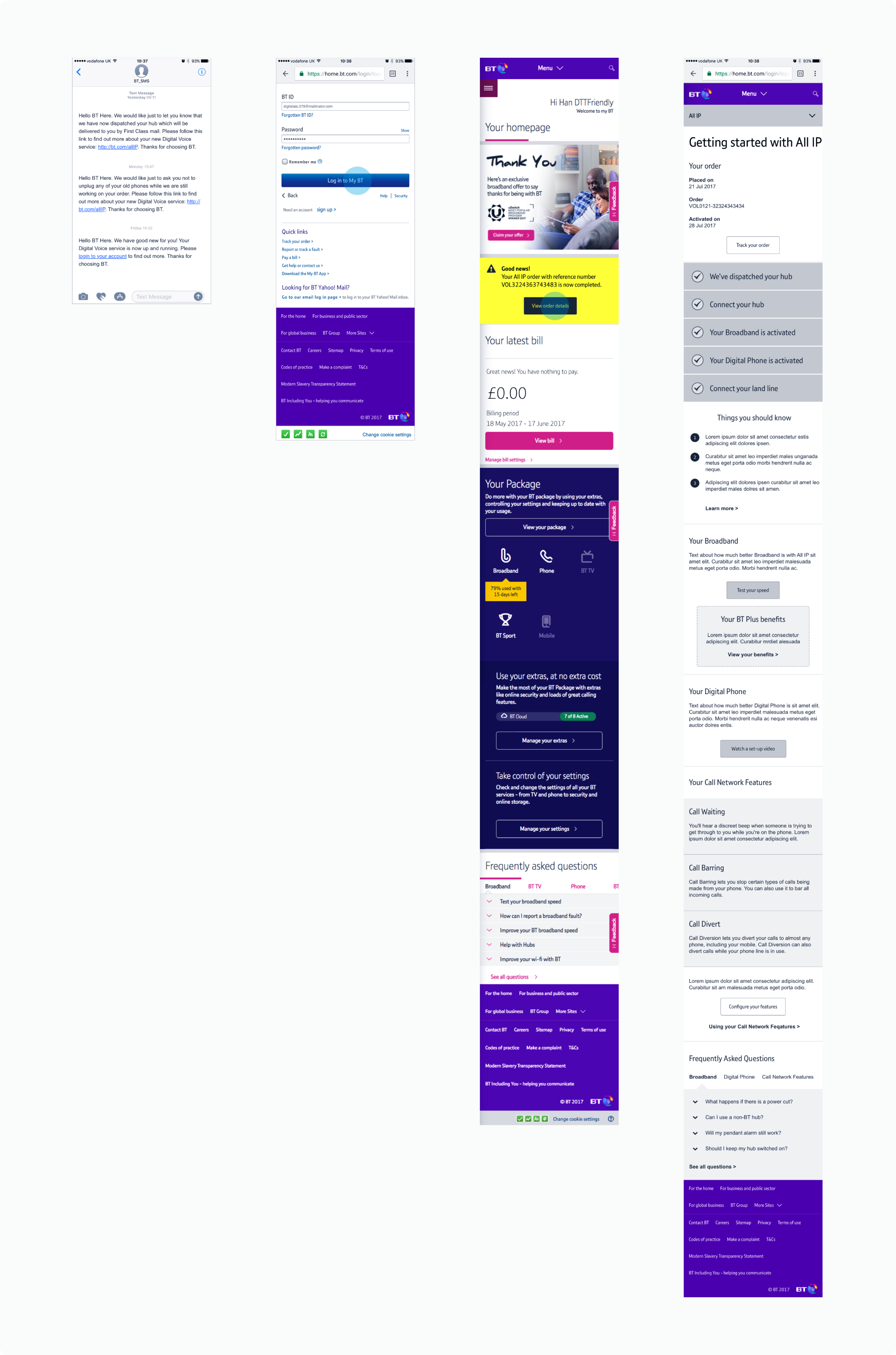
Because of legacy systems, installation was one of the trickiest parts of the process. Once a customer requested Digital Voice, the setup took place over one to three weeks, involving several touchpoints with BT. We focused on this part of the experience first, designing and testing several user flows. Analytics showed that most users preferred mobile, so we prioritised that format. One of the test scenarios is shown below.
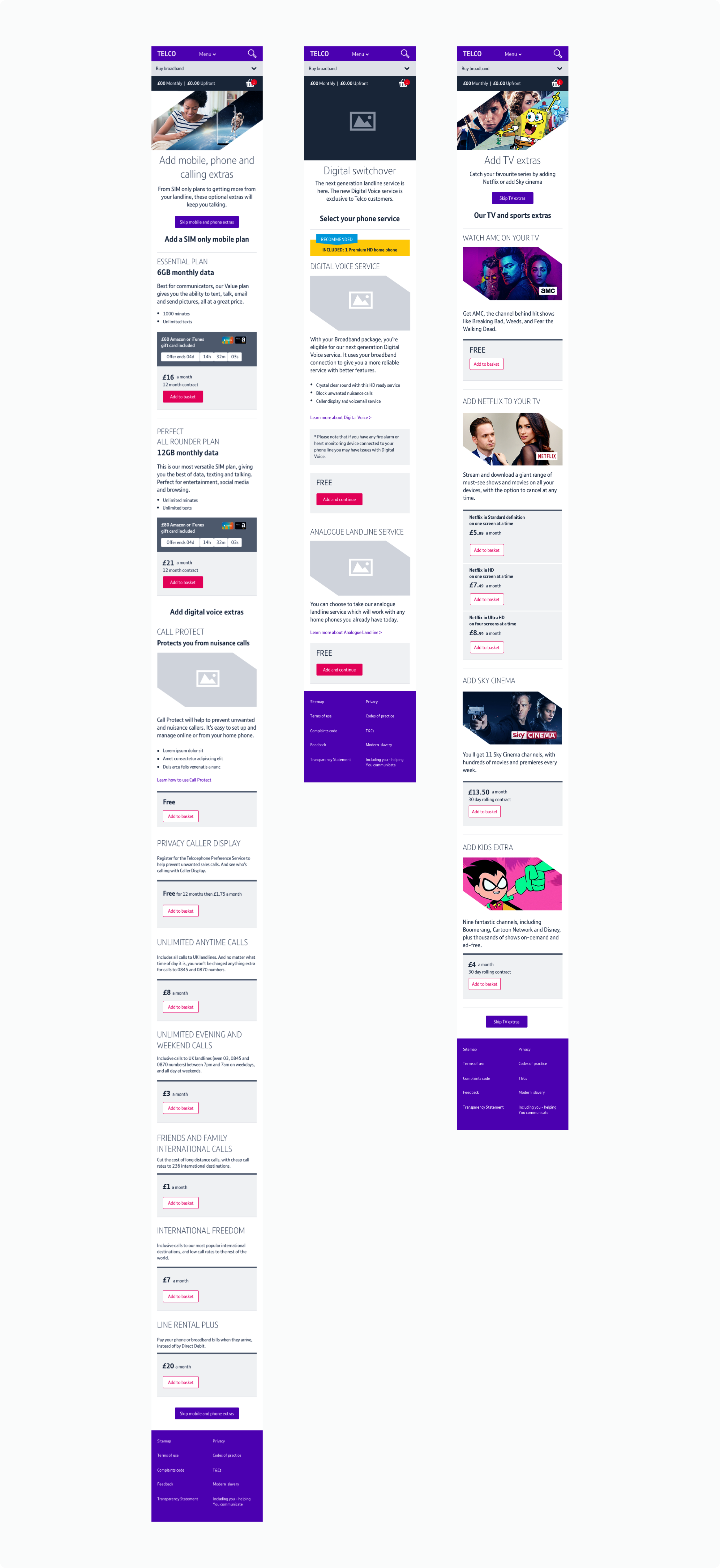
During the order journey, customers are invited to add the Digital Voice service. Some packages included a free handset, while others required purchase. Customers could also choose to add extra handsets if they wished.
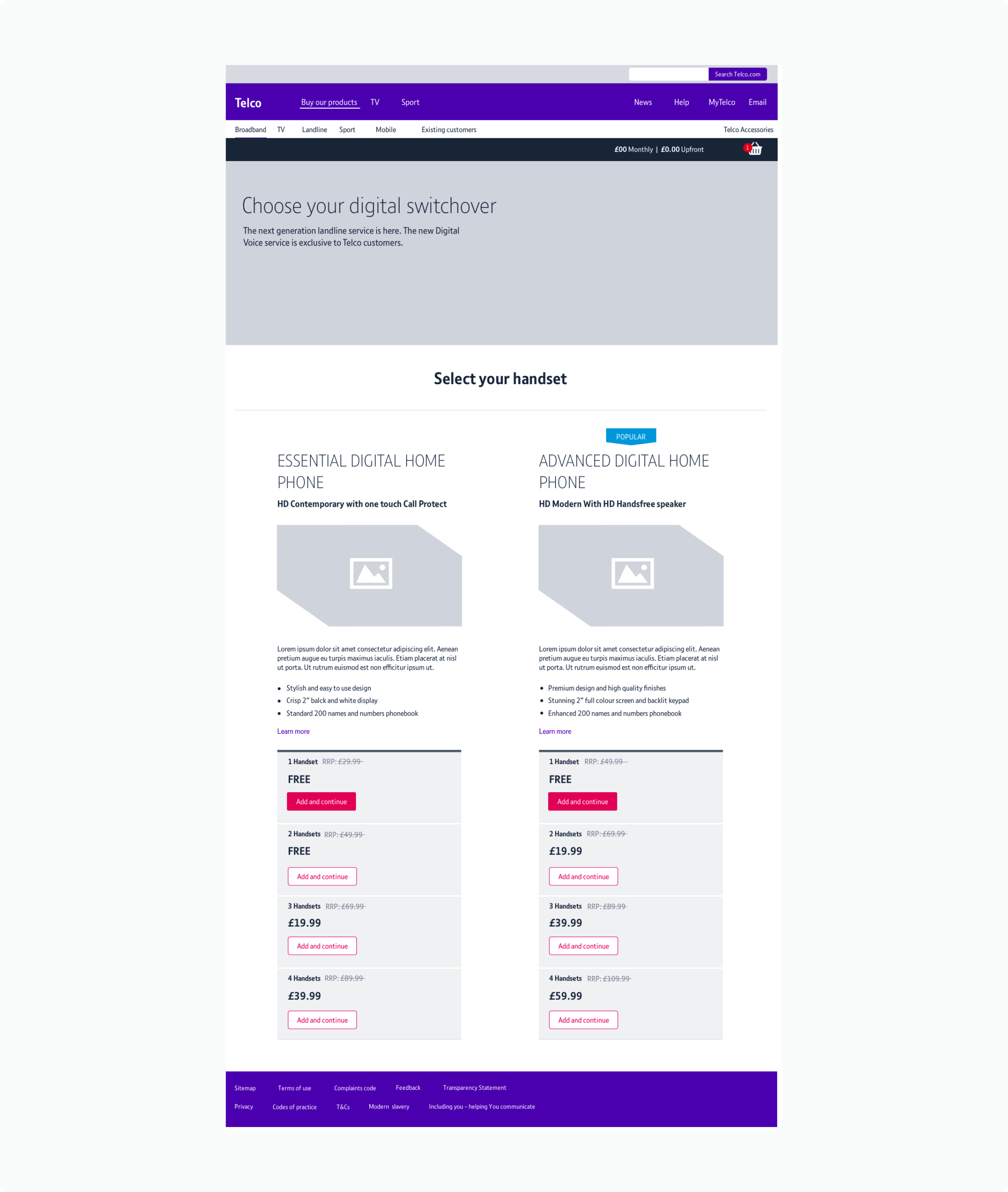
Adding Digital Voice to the purchase journey prompted a rethink of the overall flow. Instead of treating it as just another add-on, we worked with other teams to reimagine how the full experience could feel smoother and more connected for customers.
The onboarding phase required coordination between BT and the customer to get the service fully up and running. We saw this as a chance to make the process more engaging and informative. We designed a progress page that kept users updated while teaching them how to manage their new service online. The page featured a simple tracker and contextual messages that changed as customers moved through each stage.