Designing the RTL+ all-in-one media experience
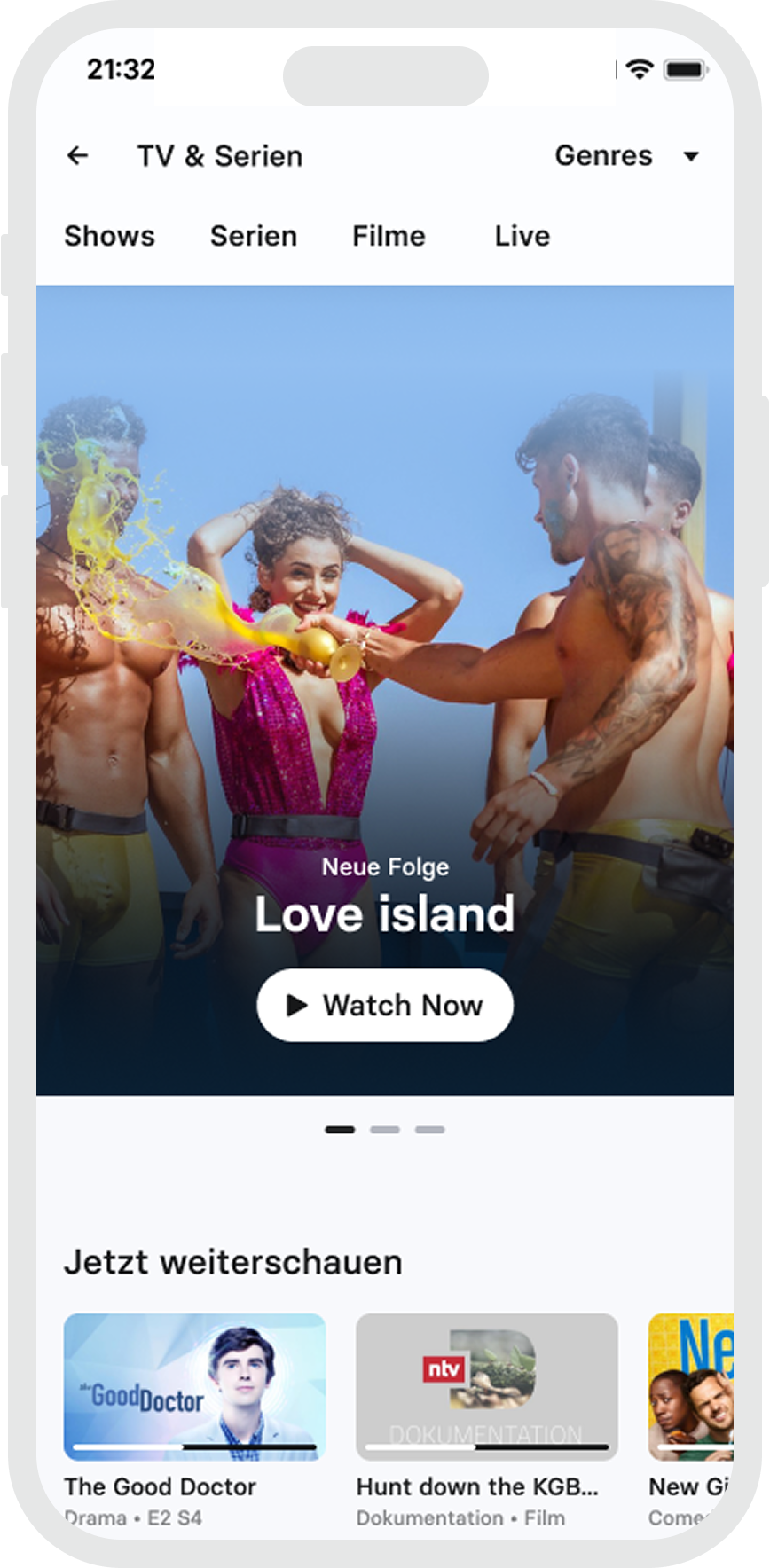
RTL began a major brand transformation with the goal of becoming Europe’s leading entertainment company. I joined the team to help design a cross-platform experience that would support this vision. The new RTL+ was imagined as a single app bringing together movies, TV shows, music, podcasts, audiobooks, and news — all in one place.
Our main focus was the German market, where RTL already had a strong presence. While the brand traditionally appealed to an older audience, one key goal was to attract younger viewers. The campaign theme “Come Together” reflected the ambition to bridge generations and create a shared entertainment experience.
Designing a platform like RTL+ comes with a unique advantage — it’s built on a familiar foundation. Many of us use streaming services like Netflix, Disney+, or Spotify daily, so we already understand what makes a good experience. This familiarity allowed us to quickly explore ideas and prototype realistic scenarios from the start.
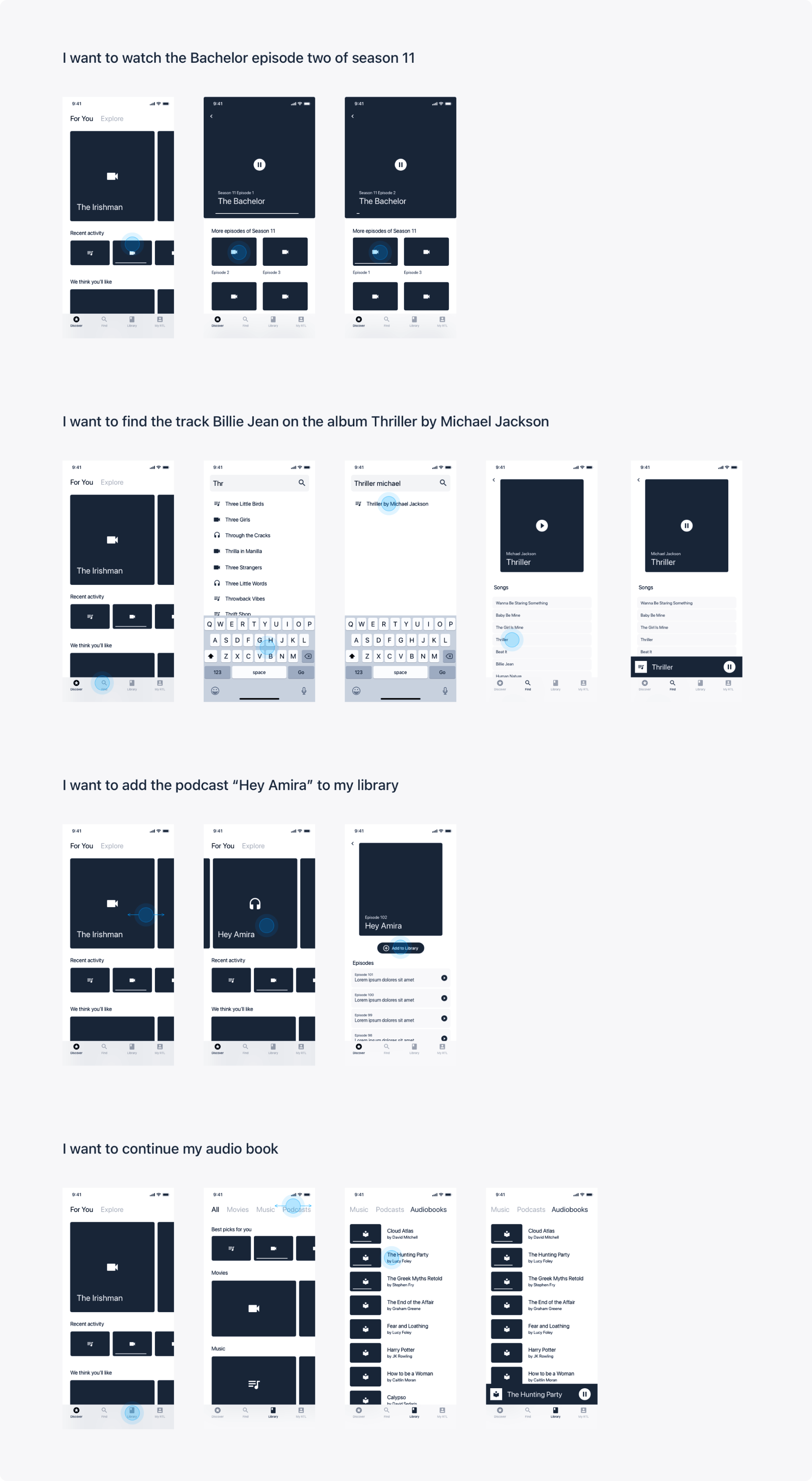
During ideation, we tested a wide range of scenarios across different devices. The goal was to make the experience intuitive and familiar without overwhelming users with an “all-you-can-eat” feel. RTL+ was the first digital service in Europe and the U.S. to combine films, TV, music, podcasts, and audiobooks within one ecosystem.
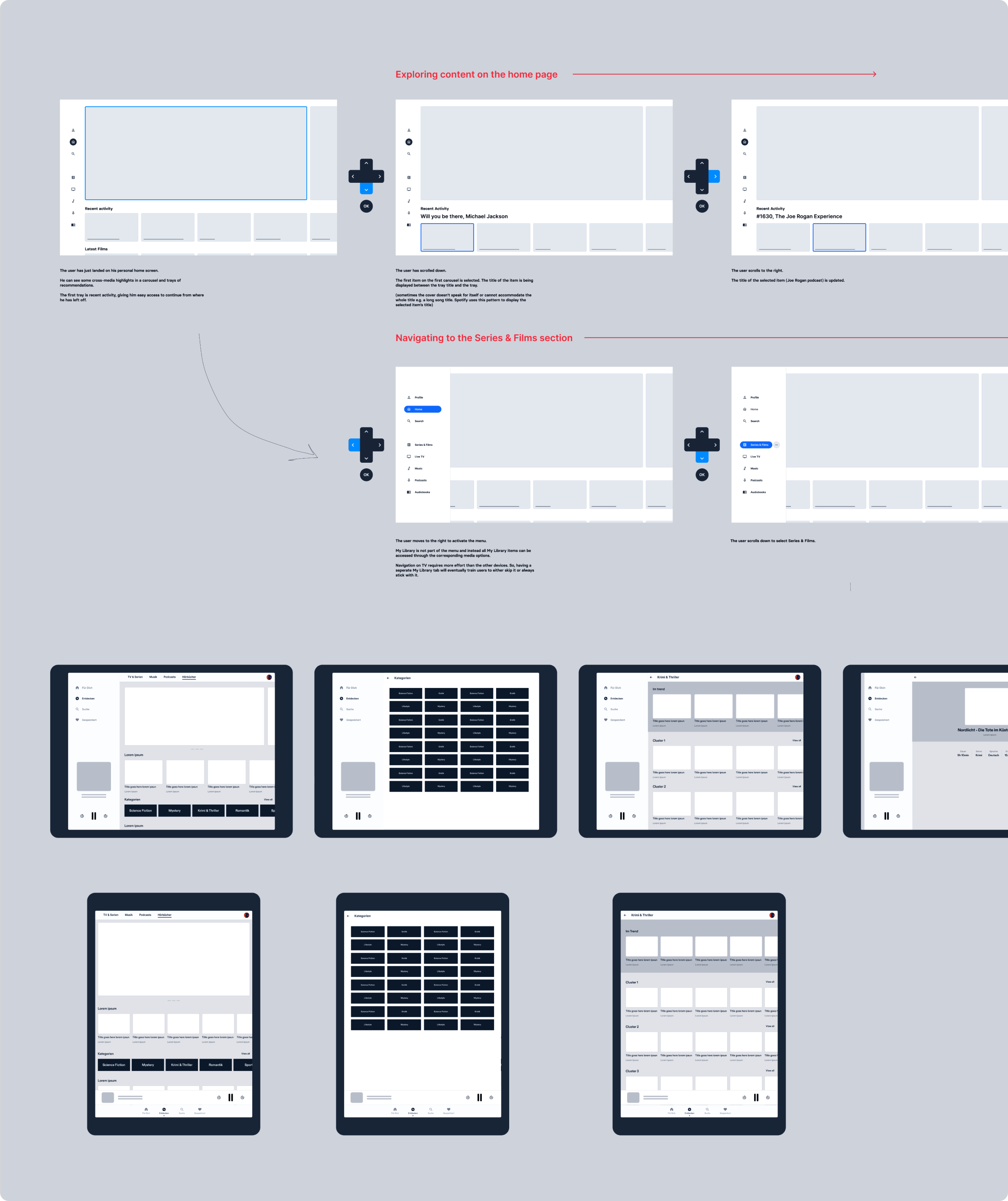
Content came from multiple providers: films and TV from RTL, music from Deezer, and audiobooks from Penguin Random House. At first, we tried a flat content hierarchy where all results appeared in one search. However, this approach wasn’t commercially sustainable, so we reorganized the platform by media type instead.
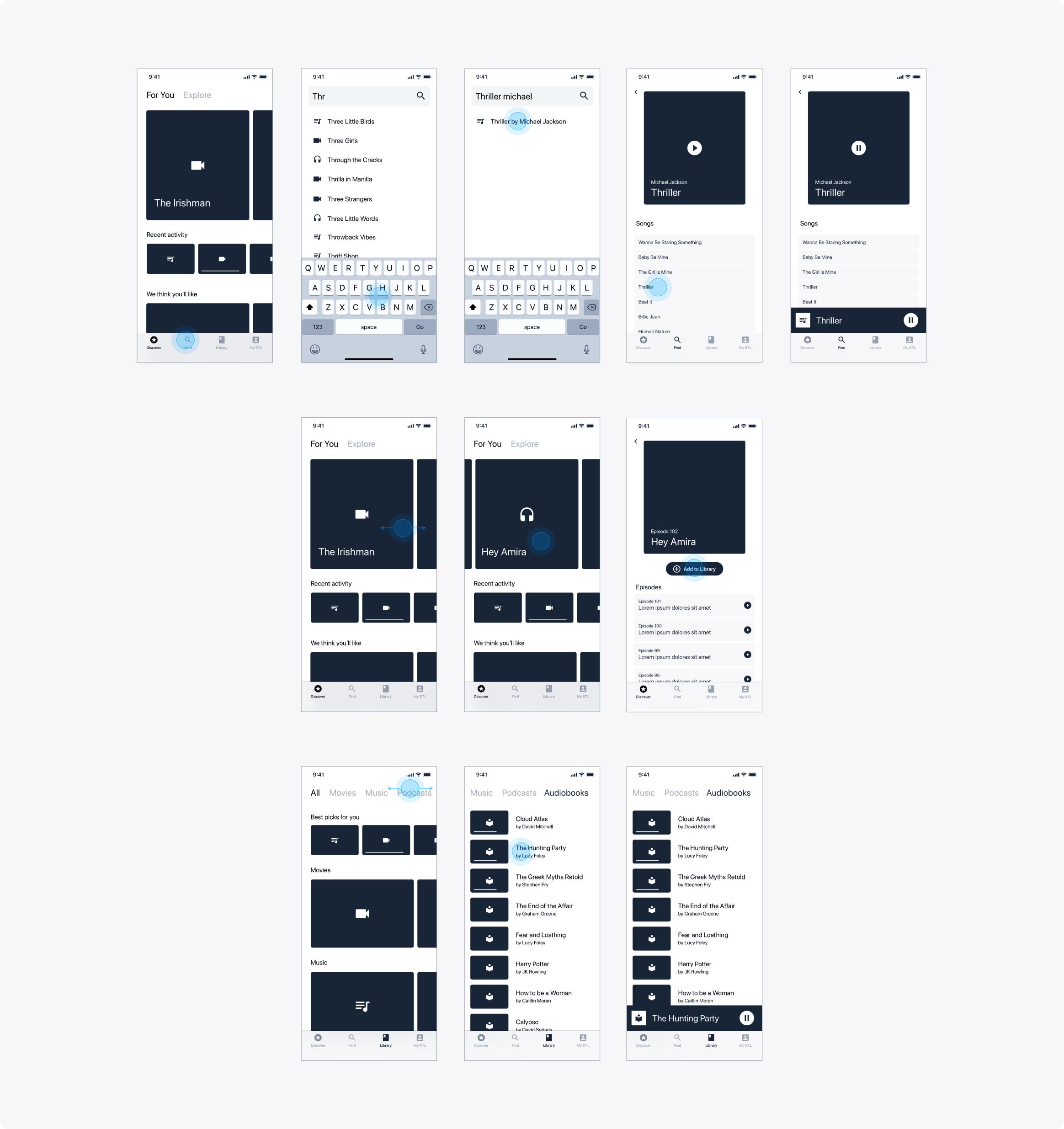
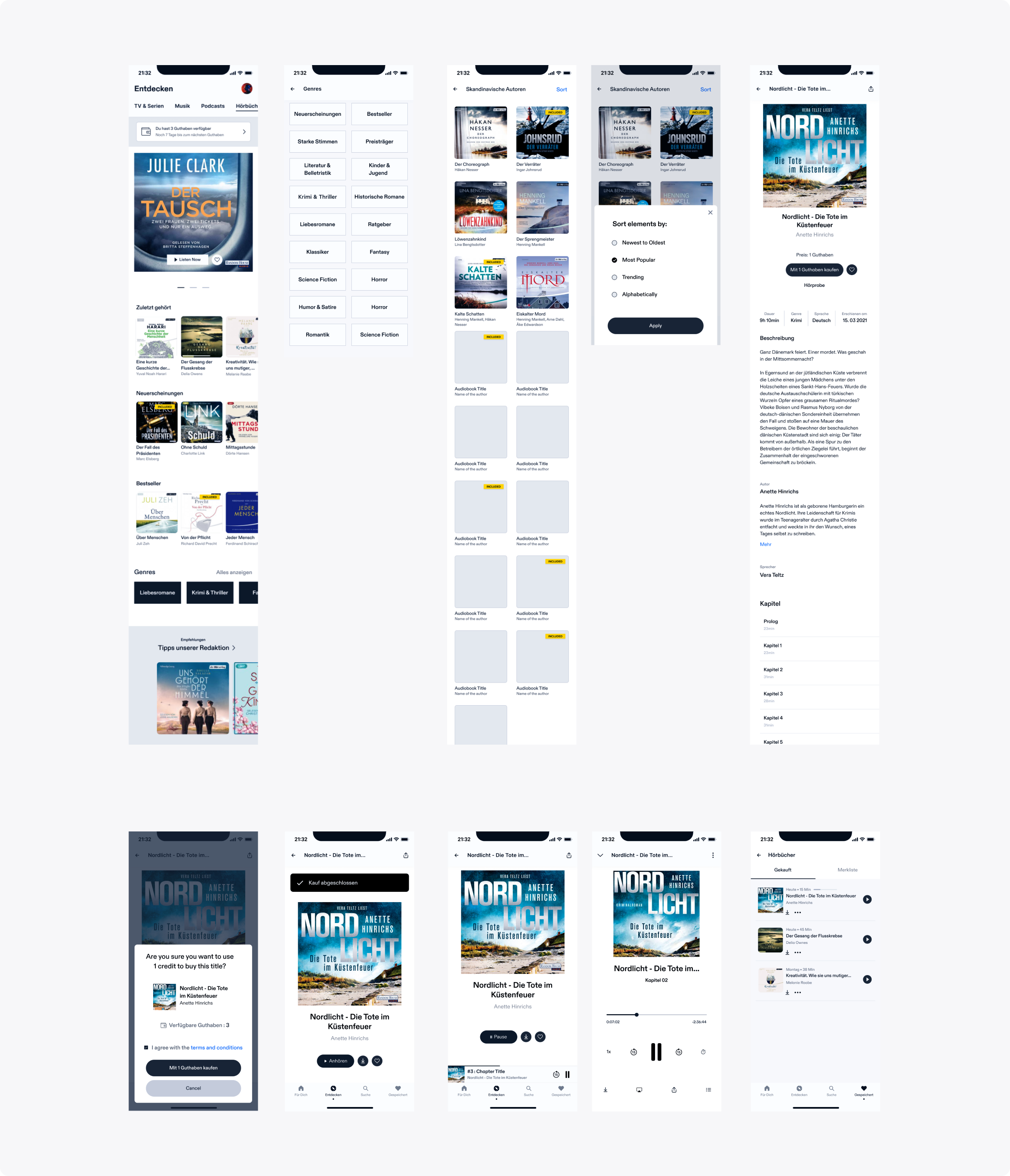
Through several iterations and user feedback sessions, we developed a clear structure for how content should look and feel. Each media type had its own layout and visual language but followed the same navigation logic. This helped users move naturally between different types of content while keeping the experience cohesive.
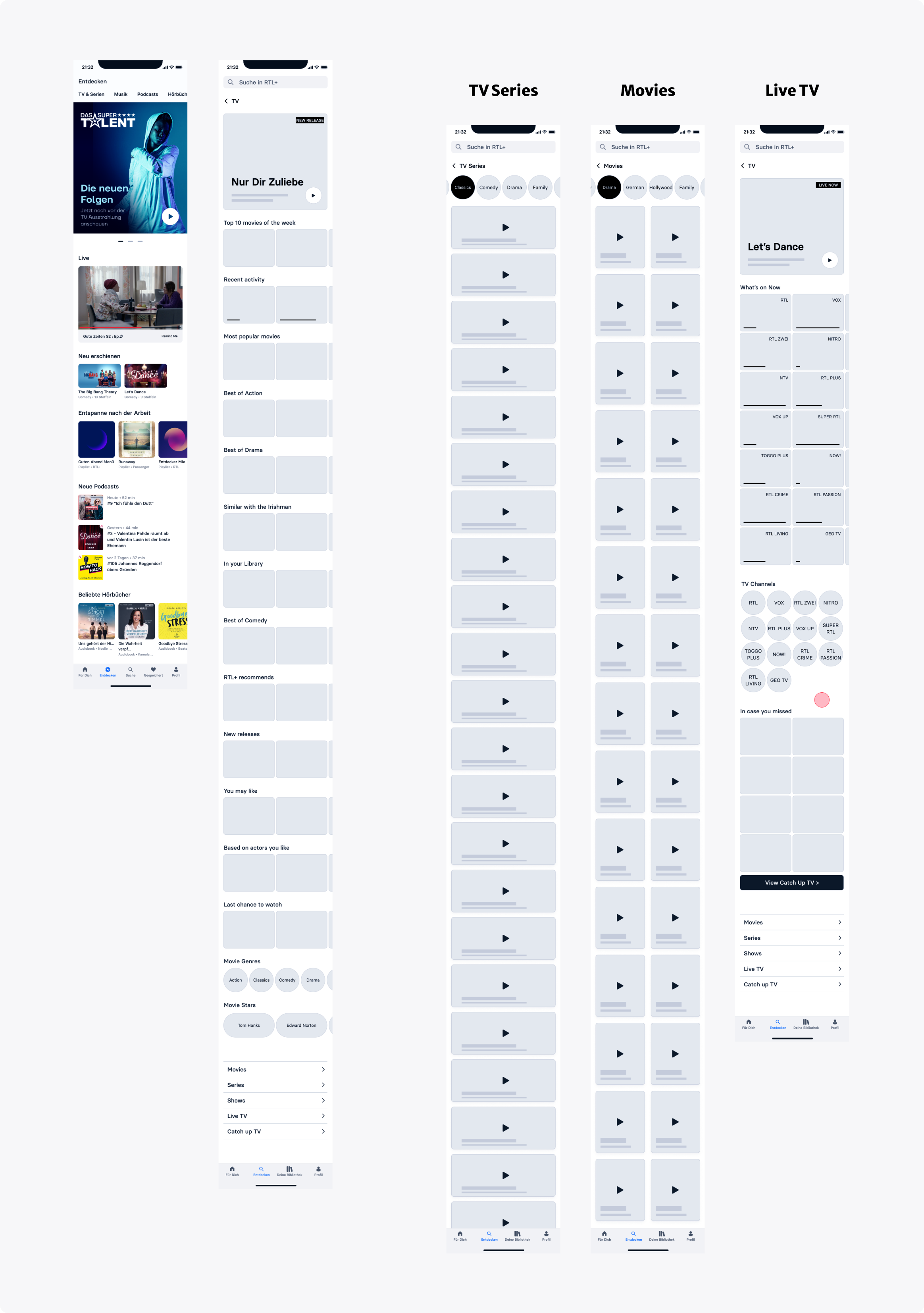
In recommendation-based services, finding the right balance between discovery and familiarity is always a challenge. Should users see more of what they already like, or should we surprise them with something new? The best approach is usually a mix of both — alternating content rows that serve different purposes. As Netflix describes it, “Every row has a reason, and every reason has a row.”
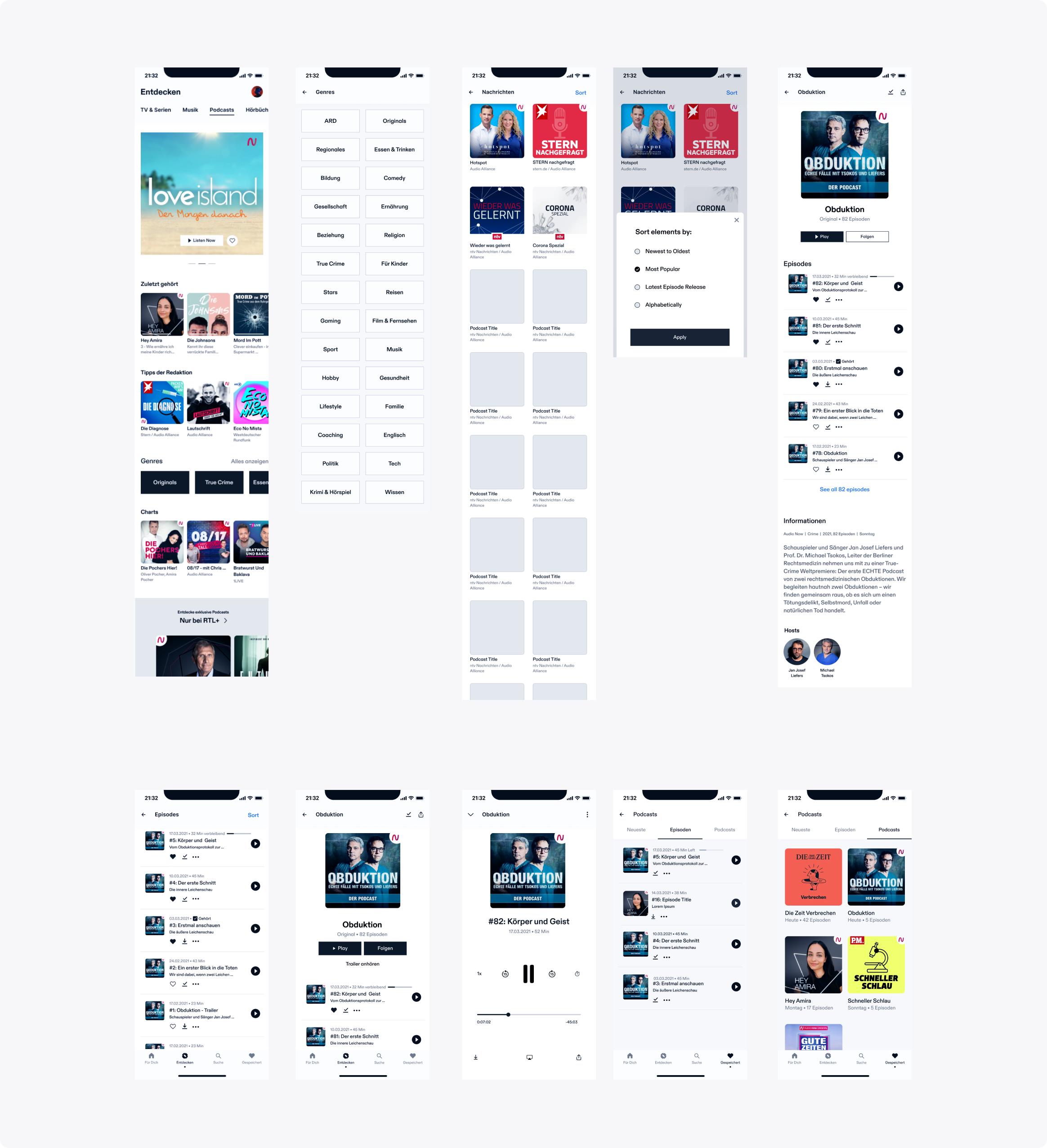
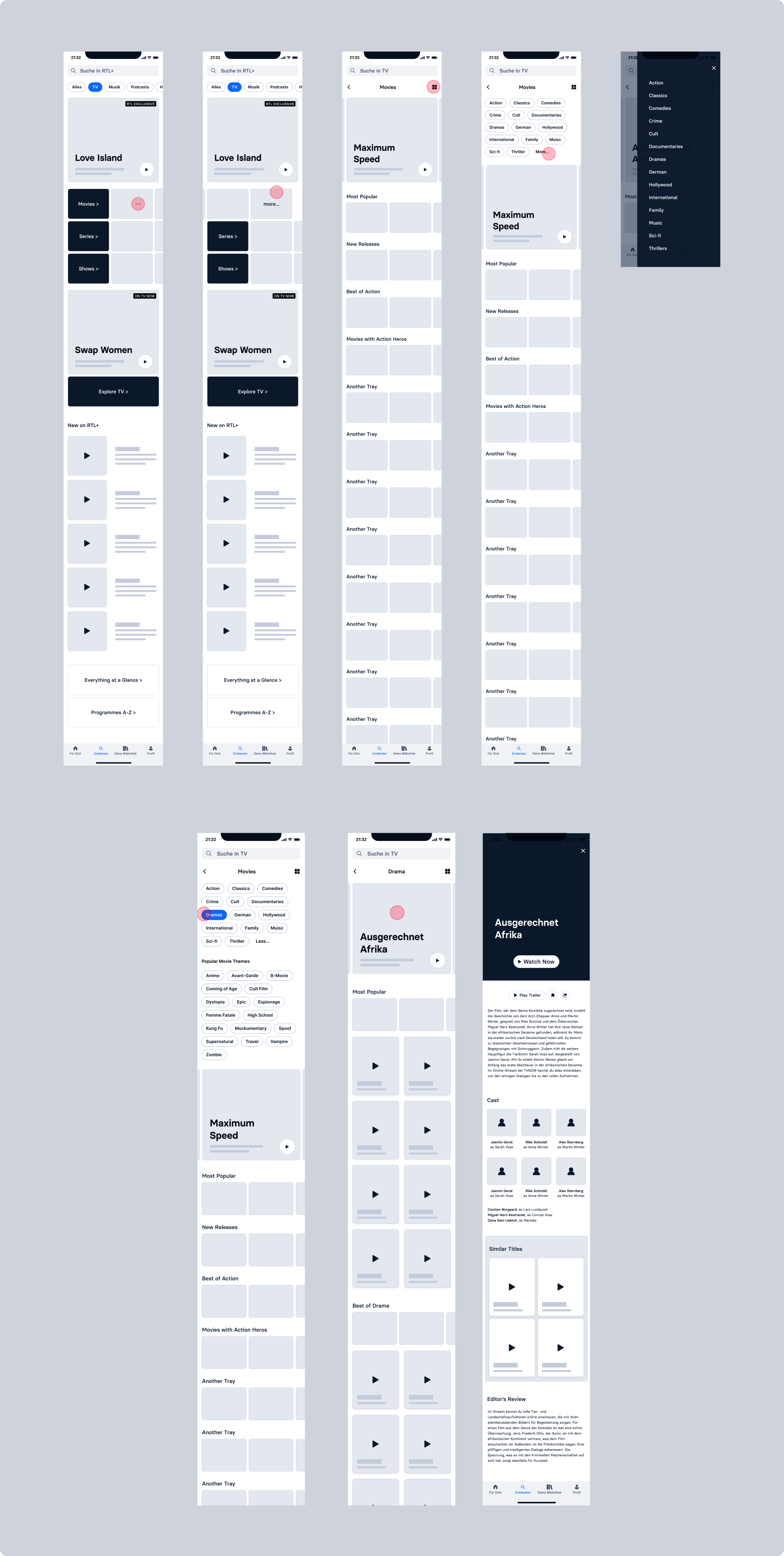
The design process was rooted in exploration, not ego. Early sketches and wireframes helped the team align on ideas before diving into the details. They acted as a shared map — a way to visualize possibilities and guide the design toward a meaningful and achievable outcome.
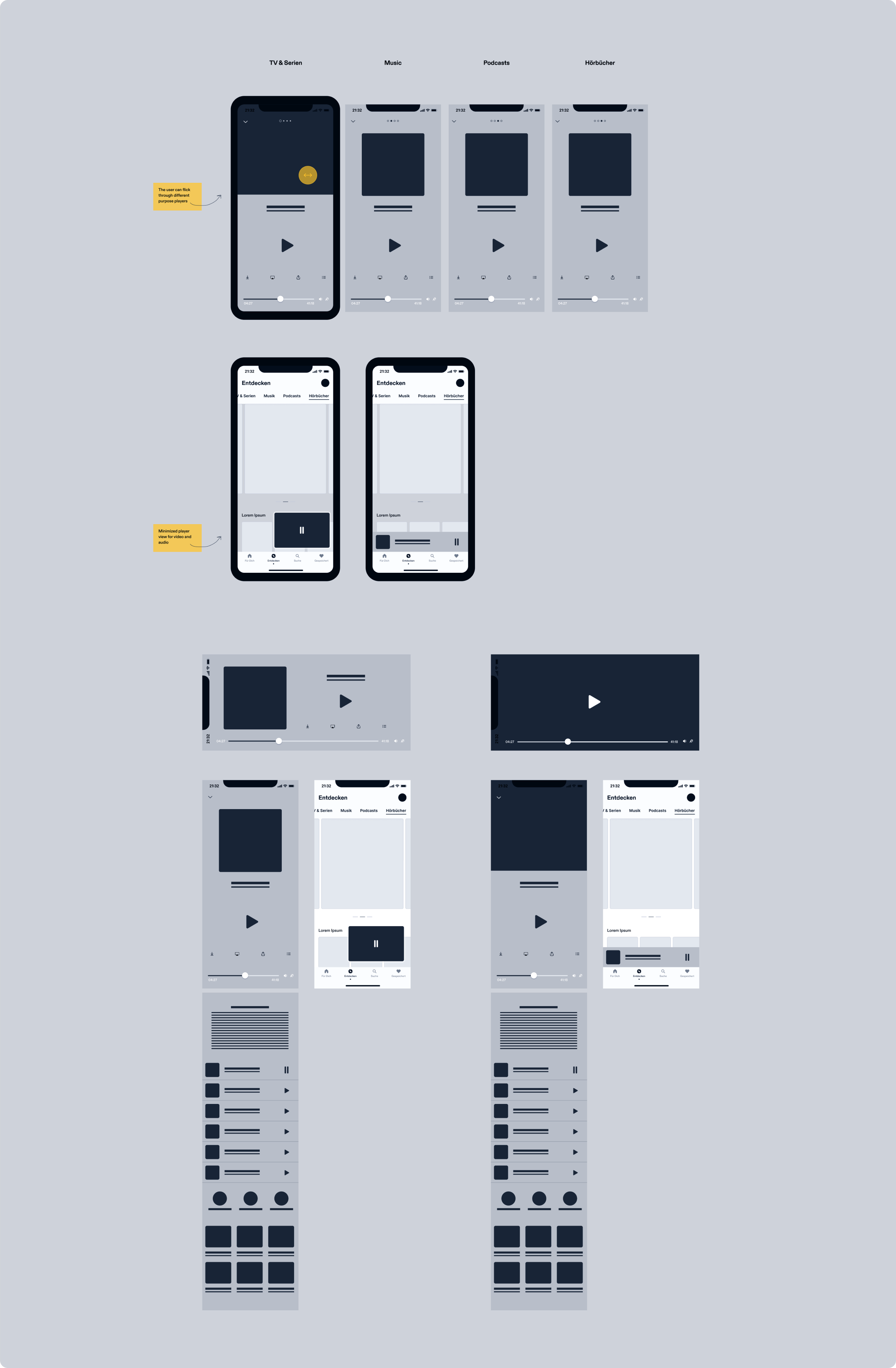
One key innovation opportunity was the media player. Each media type had its own player with unique controls — for example, radio streams didn’t have a next button, and TV didn’t need pause. But what if a user wanted to switch from watching a show to listening to music without stopping playback? We explored ideas for a unified player that could handle smooth transitions between media types in a natural way.
The social aspect of the platform was planned for a later phase. Instead of launching with social feeds or friend features, the first release focused on gathering user data and behavioral insights — such as viewing patterns and engagement — to inform future updates and community-driven features.
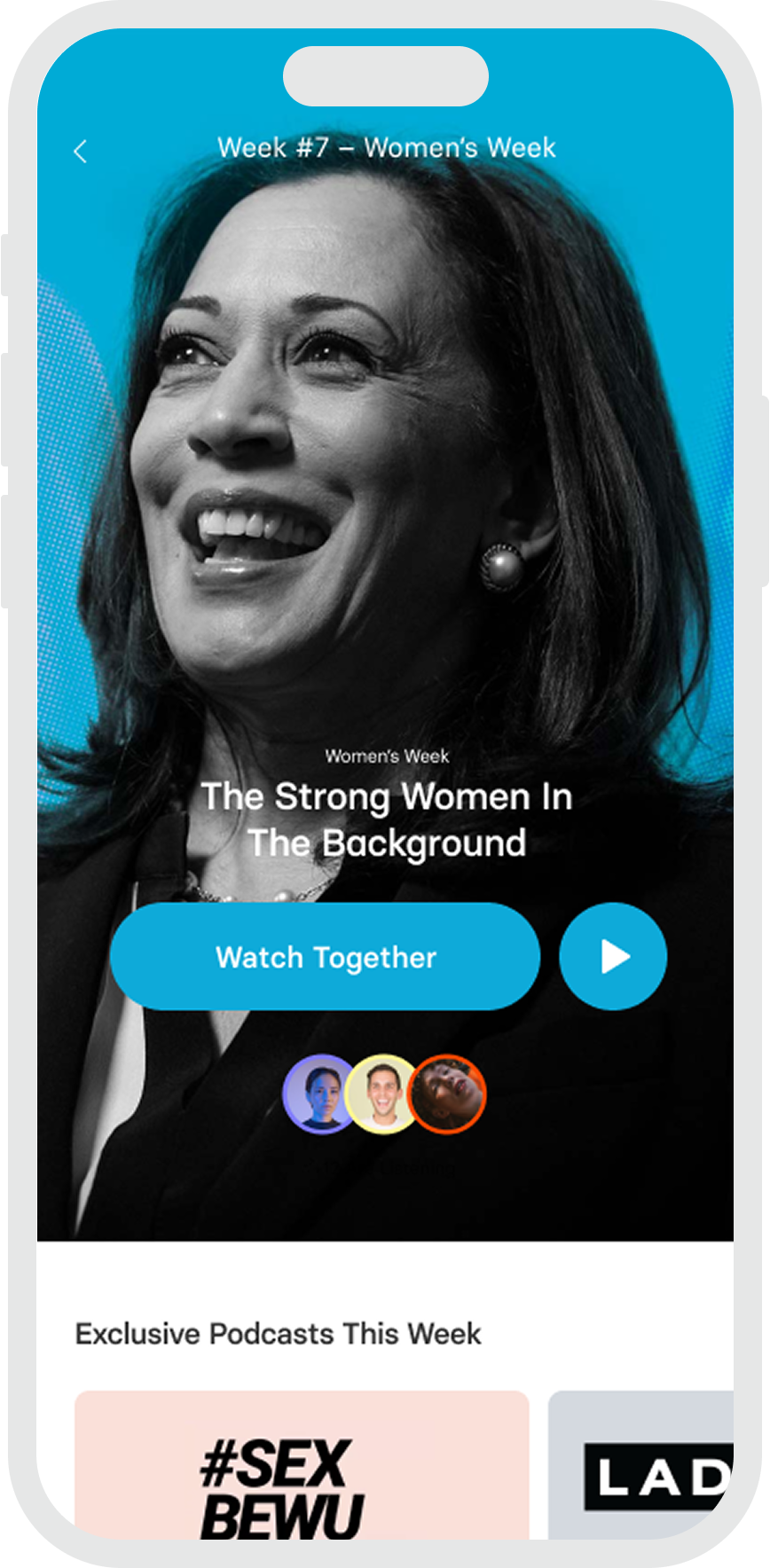
Building a co-viewing experience for RTL+
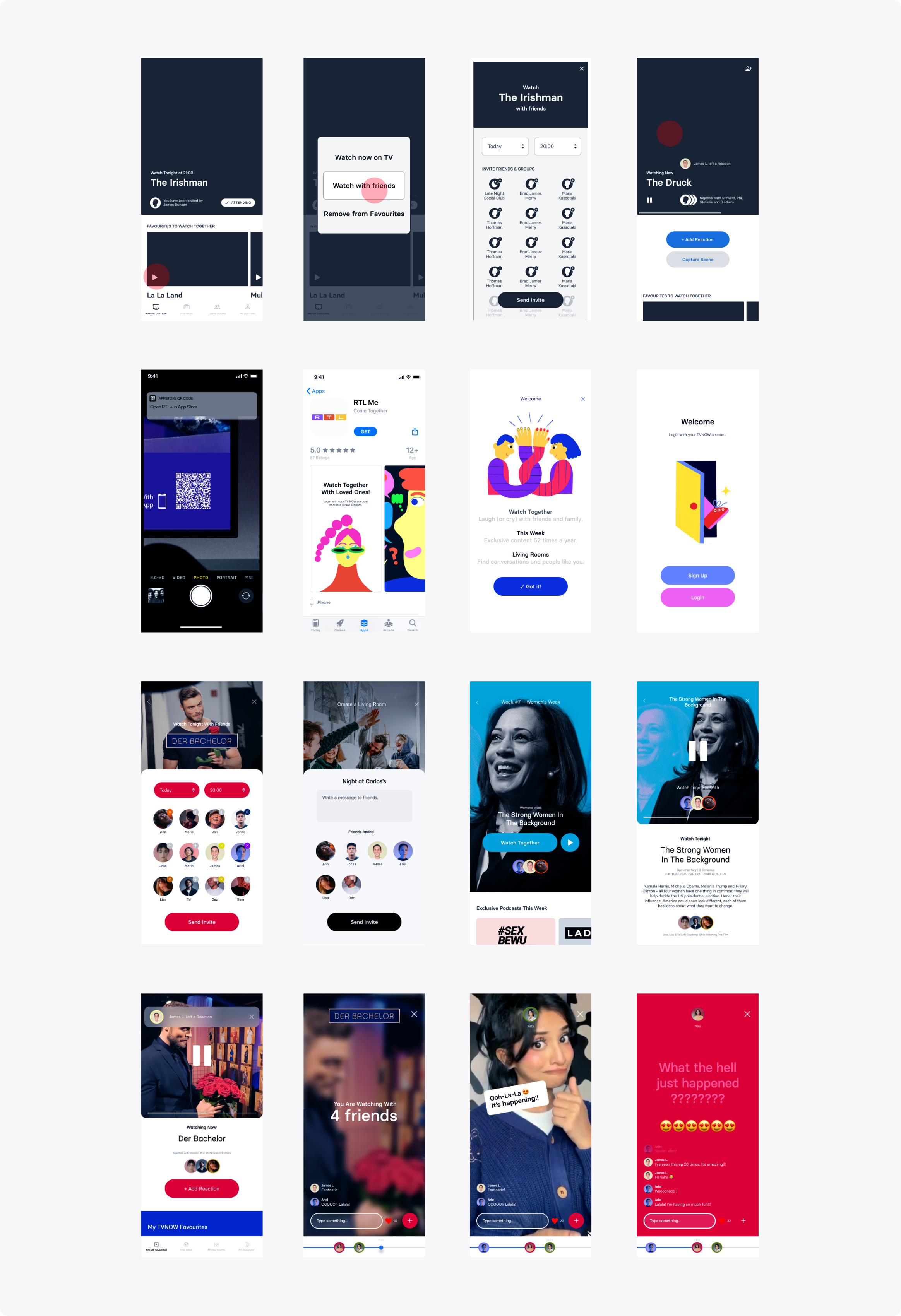
Before the full launch of RTL+, the team wanted to introduce the brand’s new direction with a small, engaging app called “app-etizer.” The goal was to showcase the brand’s vision of connecting people across generations and cultures while building an early community of users and influencers.
The concept centered around co-viewing — a trend that became popular during lockdowns when people looked for ways to watch and connect remotely. The app allowed users to invite friends, pick a movie or show, and schedule a time to watch together.
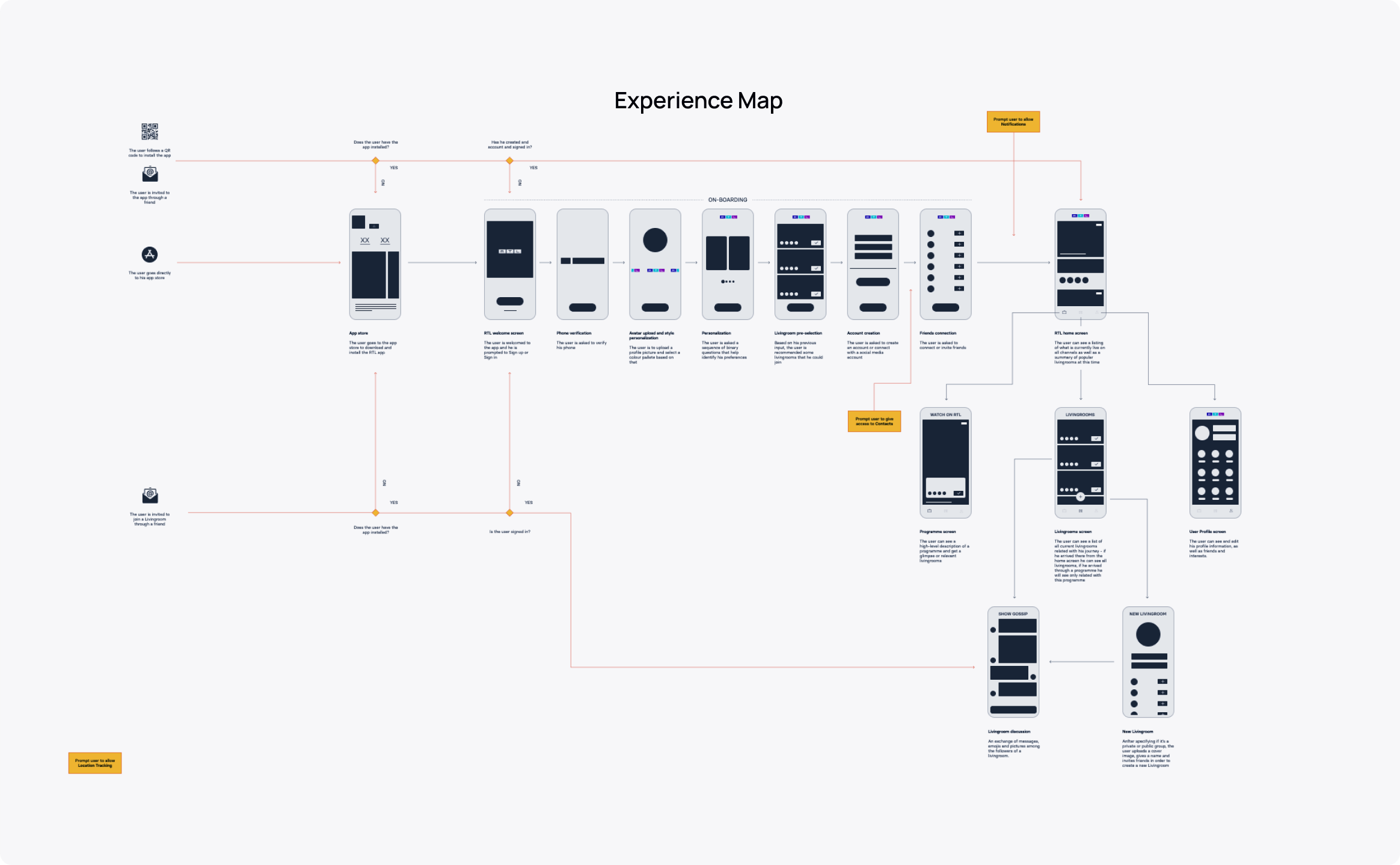
Once the group joined a session, they could watch and interact in real time. The mobile app connected seamlessly with the TV experience, letting users enjoy the content on a bigger screen. Reactions such as text messages, emojis, selfies, or short video clips appeared in sync with specific moments, creating a fun, shared experience across devices.